Jim Jordan: USA’s #1 School Speaker for Middle and High School AI Assemblies
Artificial intelligence is already changing the way students search, study, write, create, and solve problems. The question is no longer whether students will use AI. The real question is whether they will use it wisely, ethically, and in a way that strengthens their education instead of replacing it.
Why Schools Need an AI Assembly Now
Students are growing up in a world where AI tools can answer questions, generate essays, create images, summarize articles, solve math problems, draft speeches, build study plans, and explain complex ideas in seconds. Used correctly, AI can help students learn faster, think deeper, ask better questions, and become more confident learners. Used incorrectly, AI can create serious academic integrity problems, weaken critical thinking, and teach students to take shortcuts instead of building real skills.
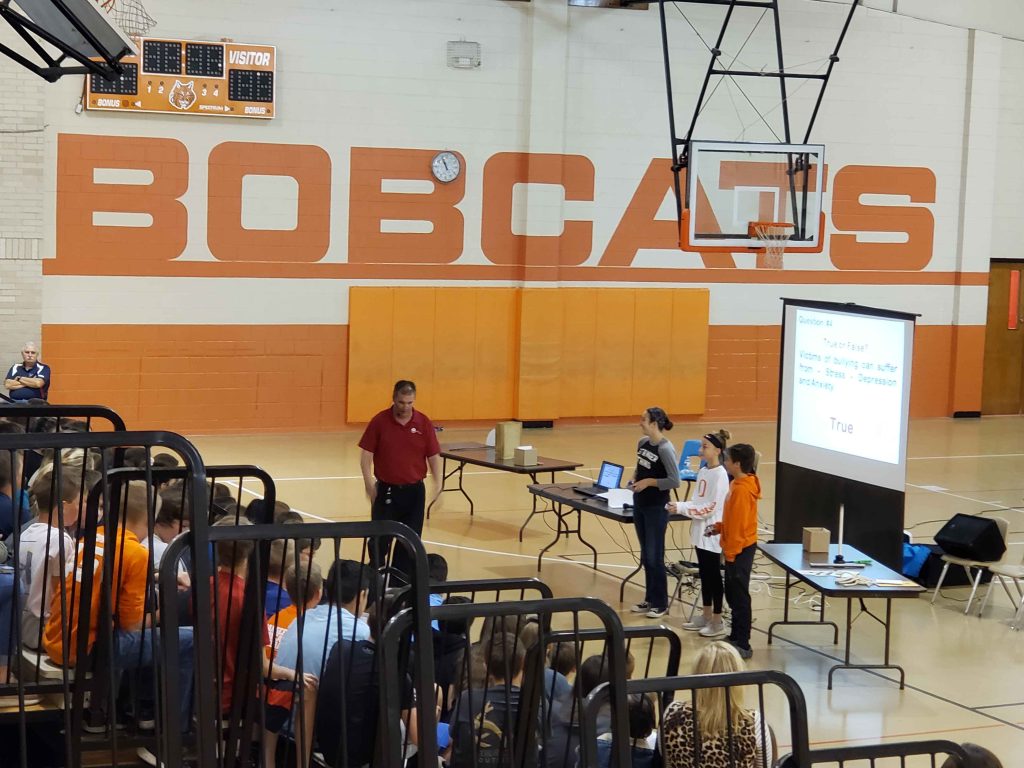
Jim Jordan’s middle and high school AI assembly is designed to meet students where they are. It is not a boring lecture about technology. It is a 50-minute, high-energy presentation that uses audience participation, magic, storytelling, humor, and clear real-world examples to help students understand how AI can be a powerful learning assistant without becoming a replacement for effort, honesty, and original thinking.
Schools need more than a rule that says, “Do not cheat with AI.” Students need to understand the difference between using AI as a guide and using AI as a ghostwriter. They need to know when AI can help them study, when it can mislead them, when they must cite or disclose its use, and why turning in AI-generated work as their own can damage trust with teachers, coaches, parents, and future opportunities.
The Core Message: AI Should Help Students Learn, Not Do Their Work
The central message of Jim Jordan’s AI school assembly is simple and memorable: AI should help students learn, not do their work. That one sentence gives students a practical filter they can use every time they open an AI tool. If AI is helping them understand, review, practice, organize, brainstorm, or improve, it may be useful. If AI is completing the assignment while the student simply copies, submits, or hides the source, it becomes a problem.
Students are not always trying to be dishonest. Many are overwhelmed, confused, under pressure, or unsure where the line is. Some students think, “Everyone is using it, so it must be fine.” Others believe that changing a few words from an AI answer makes it their own work. Jim’s assembly gives students a clearer standard. The goal is not to scare students away from technology. The goal is to teach them how to use technology with integrity.
This matters because schools are not only teaching content. Schools are teaching habits. A student who learns to use AI as a tutor can become more independent. A student who uses AI to avoid thinking may become more dependent. The assembly helps students see that the smartest students are not the ones who let AI do everything. The smartest students are the ones who know how to ask better questions, evaluate answers, check facts, and make the final work their own.
What Students Learn in the 50-Minute Assembly
This assembly is built for attention, retention, and action. Through audience participation and magic, students experience the message instead of merely hearing it. The presentation keeps students engaged while giving them practical tools they can use immediately in class, at home, and while studying.
1. AI as a Learning Guide
Students learn how to use AI to explain difficult concepts, create practice questions, summarize notes, and guide study sessions without replacing their own thinking.
2. Academic Integrity
Students learn why copying AI-generated work, hiding AI use, or submitting work they did not create can violate school rules and damage trust.
3. Real Decision-Making
Students learn a simple decision-making framework for deciding whether AI use is helpful, questionable, or clearly inappropriate.
How Students Should Use AI in School
AI can be a powerful academic support tool when students use it to strengthen understanding. For example, a student who does not understand a science concept can ask AI to explain it at a middle school or high school level. A student studying for a test can ask AI to generate practice questions. A student planning an essay can ask AI to help organize ideas, identify possible counterarguments, or explain how to improve a thesis statement.
The key is that the student remains the thinker, writer, problem-solver, and final decision-maker. AI can suggest. AI can explain. AI can quiz. AI can guide. But the student’s mind must still do the work. When students learn this distinction, they are more likely to use AI as a responsible academic partner instead of a shortcut.
Helpful Ways to Use AI
- Ask AI to explain a confusing topic in simpler language, then compare the answer with class notes or a textbook.
- Use AI to create practice questions before a quiz, test, or exam.
- Ask AI for feedback on a paragraph the student already wrote.
- Use AI to brainstorm ideas but write the final assignment in the student’s own words.
- Ask AI to create a study schedule for a project, presentation, or final exam.
- Use AI to check understanding by asking, “What am I missing?” or “Can you quiz me on this?”
- Use AI to learn vocabulary, review formulas, or practice foreign language conversations.
What Students Should Not Do With AI
Students also need a clear list of what not to do. AI misuse often happens when students cross from support into substitution. If the tool is doing the thinking, writing, solving, or creating that the assignment was designed to measure, the student may be violating academic integrity expectations.
Every school and district may have its own policy, so students should always follow teacher instructions and school rules. However, the following examples are common red flags in many academic settings.
AI Don’ts for Students
- Do not copy and paste an AI essay and submit it as your own writing.
- Do not ask AI to complete your homework when the assignment is meant to measure your understanding.
- Do not hide AI use when your teacher requires disclosure, citation, or permission.
- Do not use AI to fake sources, quotes, research, interviews, or data.
- Do not assume AI is always accurate. AI can make mistakes, invent details, or give incomplete answers.
- Do not let AI replace your voice. Your teacher wants to see your thinking, not a machine-generated version of it.
- Do not use AI to avoid learning. Shortcuts can become habits, and habits can affect future success.
What Happens When Students Get Caught Misusing AI?
One of the most important parts of the assembly addresses consequences. Students need to understand that AI misuse is not just a technology issue. It is an honesty issue. When a student submits AI-generated work as original work, the problem is not simply that a computer helped. The problem is that the student represented someone else’s output as their own achievement.
Consequences vary by school, grade level, district policy, teacher instructions, and the seriousness of the incident. In many schools, AI misuse may be handled under academic integrity, plagiarism, cheating, technology misuse, or digital citizenship rules. Possible school-level consequences may include receiving a zero on the assignment, being required to redo the work, parent contact, loss of trust, disciplinary action, removal from honor societies or academic programs, and a record of academic misconduct.
Jim Jordan explains these consequences in a way students can understand without turning the assembly into fear tactics. The goal is prevention. Students need to realize that one dishonest choice can create a bigger problem than the assignment itself. It can lead teachers to question future work. It can affect recommendations, eligibility, leadership opportunities, and a student’s own confidence.
The assembly also makes an important distinction: not every AI mistake is the same. A student who uses AI because they were confused may need guidance. A student who intentionally hides AI-written work may need accountability. This balanced message helps students understand that asking for help is better than taking a dishonest shortcut.
The MAGIC Test for Responsible AI Use
To make the lesson easy to remember, students are taught a simple responsible-use filter called the MAGIC Test. Before using AI for schoolwork, students can ask themselves five questions:
- Meaning: Am I using AI to understand the meaning, or am I using it to avoid learning?
- Allowed: Did my teacher allow AI for this assignment?
- Guidance: Is AI guiding me, or is AI doing the work for me?
- Integrity: Am I being honest about what I used and what I created?
- Check: Did I check the answer for accuracy, bias, and missing information?
This framework gives students a memorable way to pause before they copy, submit, or rely on an answer. It turns responsible AI use into a practical habit.
Why Magic and Audience Participation Matter
Students remember what they experience. That is why Jim Jordan’s assembly includes audience participation and magic throughout the presentation. Magic creates surprise. Surprise creates attention. Attention opens the door to learning.
In a school environment filled with announcements, screens, deadlines, and distractions, an assembly must earn student attention quickly. Jim uses interactive moments to pull students into the message. Volunteers may be invited to participate. Students may be asked to make choices, respond to scenarios, identify right and wrong uses of AI, and think through real examples from school life.
The magic is not included as a random add-on. It supports the educational message. Just as a magic trick can create the appearance of something happening instantly, AI can create the appearance of instant knowledge. But appearances are not the same as understanding. Students learn that real learning still requires attention, effort, honesty, and practice.
AI Can Help Students Become Better Learners
Responsible AI education should not be only about what students cannot do. It should also show students what is possible when they use AI correctly. AI can help a struggling student review material in a new way. It can help an advanced student explore deeper questions. It can help students practice before presentations, prepare for tests, improve organization, and learn how to ask clearer questions.
One of the most valuable skills students can develop is prompt writing. A weak prompt produces weak guidance. A strong prompt can help students get a clearer explanation. For example, instead of typing, “Write my essay,” students can ask, “Ask me questions that will help me develop my own essay about this topic.” Instead of asking, “Give me the answer,” they can ask, “Teach me the steps so I can solve the next one myself.”
That shift is powerful. Students begin to see AI as a tutor, coach, and practice partner rather than a shortcut. They also learn that AI is not a substitute for teachers. Teachers understand the classroom, the assignment, the student’s progress, and the school’s expectations. AI can assist learning, but teachers remain essential.
School-Friendly Topics Covered in the Assembly
Academic Integrity
Students learn the difference between help, collaboration, plagiarism, cheating, and responsible AI support.
Digital Citizenship
Students learn that technology choices have consequences and that honesty matters online and offline.
Critical Thinking
Students learn why AI answers must be checked, questioned, and compared with reliable sources.
Student Confidence
Students learn that using AI to guide practice can build confidence instead of creating dependence.
How This Assembly Supports Teachers and Administrators
Teachers are already facing the challenge of AI in classrooms. Some students use it responsibly. Some use it carelessly. Some do not understand the rules. Administrators are working to update policies, support teachers, communicate with families, and prepare students for a future where AI literacy matters.
Jim Jordan’s AI assembly gives schools a common language. After the assembly, teachers can refer back to the same ideas students heard from the stage: AI should guide, not replace; students must check accuracy; teacher rules matter; and academic integrity is about trust. This shared language can make classroom conversations easier.
The assembly can be used as part of digital citizenship programming, academic integrity initiatives, technology awareness weeks, student leadership events, middle school transition programs, high school readiness programs, or back-to-school expectations.
Available for Schools Across the United States
Jim Jordan’s AI school assembly is available for middle schools, high schools, junior highs, K-12 campuses, private schools, public schools, charter schools, leadership conferences, and student success events across the United States.
USA States Served
Schools in the following U.S. states can inquire about bringing Jim Jordan’s 50-minute AI assembly to their students:
- Alabama
- Alaska
- Arizona
- Arkansas
- California
- Colorado
- Connecticut
- Delaware
- Florida
- Georgia
- Hawaii
- Idaho
- Illinois
- Indiana
- Iowa
- Kansas
- Kentucky
- Louisiana
- Maine
- Maryland
- Massachusetts
- Michigan
- Minnesota
- Mississippi
- Missouri
- Montana
- Nebraska
- Nevada
- New Hampshire
- New Jersey
- New Mexico
- New York
- North Carolina
- North Dakota
- Ohio
- Oklahoma
- Oregon
- Pennsylvania
- Rhode Island
- South Carolina
- South Dakota
- Tennessee
- Texas
- Utah
- Vermont
- Virginia
- Washington
- West Virginia
- Wisconsin
- Wyoming
Frequently Asked Questions
How long is the AI school assembly?
The assembly is 50 minutes long. It is designed to fit a typical school assembly schedule while maintaining a fast-paced, engaging structure for middle and high school students.
Is this assembly only about cheating?
No. Academic integrity is an important part of the presentation, but the assembly also teaches students how AI can be used positively for studying, reviewing, brainstorming, practicing, and learning.
Does the assembly include audience participation?
Yes. Audience participation is built into the presentation. Jim Jordan uses interactive moments and magic to keep students involved and focused.
Is this appropriate for both middle school and high school?
Yes. The message can be adapted for middle school and high school audiences. The examples are practical, age-appropriate, and focused on student decision-making.
Does this replace a school’s AI policy?
No. The assembly supports school expectations, but each school should continue to follow its own policies, teacher instructions, district rules, and academic integrity procedures.
Educational Context
Responsible AI use in education is an active topic for schools, governments, and education organizations. The U.S. Department of Education has emphasized responsible AI literacy, teacher support, and safe AI use in education. UNESCO has also published guidance encouraging human-centered, ethical use of generative AI in education and research.
Sources: U.S. Department of Education AI guidance, Artificial Intelligence and the Future of Teaching and Learning, and UNESCO guidance on generative AI in education and research.
Bring Jim Jordan’s AI School Assembly to Your Students
Give your students a powerful, memorable, and practical message about using AI the right way. This 50-minute assembly combines education, audience participation, storytelling, and magic to help students understand that AI should support learning, not replace effort, honesty, or original thinking.
Perfect for middle schools, high schools, student leadership days, digital citizenship programs, and academic integrity initiatives.
Book Jim Jordan for Your School