AI Speaker for Students in USA: Jim Jordan Teaches Responsible AI Use in Schools
Artificial intelligence is changing the way students learn, study, write, research, create, and prepare for the future. Jim Jordan brings a powerful message to schools across the USA: AI can be an incredible learning tool, but it should help students think, not replace their thinking.
Why Schools Need an AI Speaker for Students
Students are already using AI. Some use it to study, summarize notes, brainstorm ideas, and understand difficult concepts. Others use it to take shortcuts, copy answers, write assignments, or avoid doing the work themselves. That is why schools need clear, practical, student-friendly education on how AI should and should not be used.
Jim Jordan is an AI speaker for students in the USA who helps middle school and high school audiences understand the difference between responsible AI use and academic dishonesty. His message is direct, memorable, and practical: AI should be used to help and educate, not to cheat, plagiarize, or complete assignments that students are expected to do themselves.
This topic is now one of the most important conversations in education. AI tools can write essays, solve problems, generate images, summarize books, build presentations, create code, and answer questions in seconds. That power can support learning when used correctly, but it can also create serious problems when students use AI without permission, without disclosure, or in a way that violates school rules.
Jim Jordan: Over 20 Years of Speaking to Students
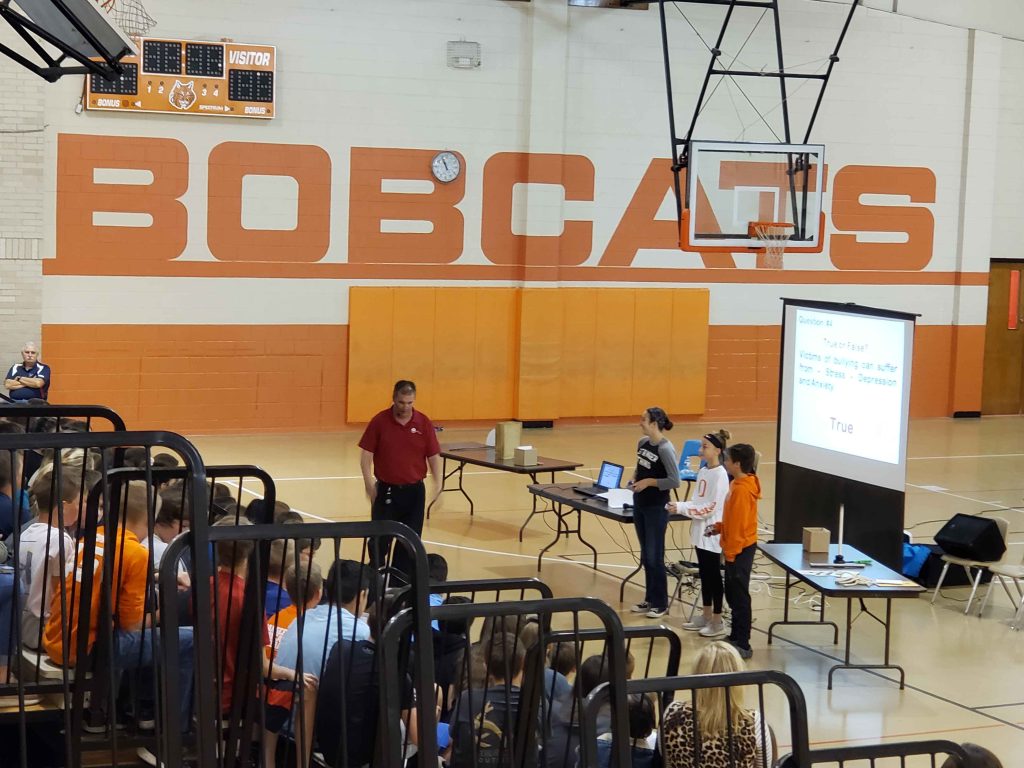
Jim Jordan is not new to school assemblies. For over 20 years, Jim has spoken to students about school bullying, respect, choices, personal responsibility, kindness, and the impact of their actions. His background as a school speaker gives him a strong understanding of how students listen, what keeps their attention, and how to communicate serious messages in a way students remember.
For many years, Jim’s work focused on helping students understand bullying, empathy, and the power of their words and choices. Today, those same themes connect directly to AI. Technology does not remove responsibility. A student still has to make choices. A student still has to be honest. A student still has to understand that what they submit, post, copy, create, or share can have consequences.
That experience makes Jim a strong fit for schools looking for an AI speaker who can do more than explain the technology. Students do not need a complicated technical lecture filled with jargon. They need a speaker who can make the message clear, relevant, and real. Jim brings the energy of a professional presenter, the experience of a long-time school speaker, and the practical knowledge of someone actively working in AI.
Jim Jordan Also Owns JimmyAI
Jim Jordan is also the owner of JimmyAI, a company focused on helping small businesses understand and use artificial intelligence in practical ways. Through JimmyAI, Jim works with AI training, apps, chatbots, and AI phone services for small businesses.
This matters because Jim is not only speaking about AI from theory. He is actively involved in the AI space. He understands how businesses are using AI to answer phones, support customers, automate communication, improve websites, build tools, and save time. That real-world experience helps him explain AI to students in a way that connects to school, careers, entrepreneurship, and the future workplace.
AI Training
Jim helps people understand how to use AI tools clearly, responsibly, and productively.
Apps and Automation
JimmyAI works with practical AI-powered solutions that help small businesses save time and improve service.
Chatbots
Jim understands how AI chatbots can support websites, answer questions, and guide customers.
AI Phone Services
JimmyAI provides AI phone solutions that help small businesses handle calls and customer communication.
The Student Message: Use AI to Learn, Not to Cheat
One of the biggest misunderstandings students have about AI is the idea that if a tool can produce an answer, it must be acceptable to use that answer. That is not true. In school, the purpose of an assignment is usually not just to produce a final product. The purpose is to show learning, practice thinking, develop skills, demonstrate understanding, and build confidence.
When a student uses AI to explain a math concept, generate practice questions, organize study notes, or give feedback on something they already wrote, AI can be helpful. But when a student asks AI to write the essay, complete the worksheet, solve the assignment, or create a project that they then submit as their own, the student may be crossing an academic integrity line.
Jim teaches students that AI should act like a guide, tutor, coach, or study partner. It should not act like a replacement student. The student must still do the reading, thinking, writing, solving, checking, and learning. The goal is not to avoid effort. The goal is to use AI to make effort more focused and effective.
Responsible Ways Students Can Use AI in School
Students often need examples. It is not enough to tell them, “Use AI responsibly.” They need to know what that looks like in a real school situation. Jim’s AI assembly gives students practical examples they can understand immediately.
- Use AI to explain confusing topics. A student can ask AI to explain a science, history, or math concept in simpler language.
- Use AI to create practice questions. AI can help students quiz themselves before a test or exam.
- Use AI to brainstorm ideas. Students can explore possible topics, outlines, or discussion points before writing their own work.
- Use AI to improve study habits. AI can help create study schedules, review plans, and memory tips.
- Use AI for feedback. Students can ask for feedback on clarity, organization, or grammar after they have written their own draft.
- Use AI to ask better questions. AI can help students discover what they do not yet understand.
- Use AI to prepare for presentations. Students can practice speaking points, timing, and organization.
The key is transparency. If a teacher allows AI, students should still follow the instructions. If a teacher requires disclosure, students should say how AI was used. If a teacher says AI is not allowed for a specific assignment, students need to respect that rule.
What Students Should Not Do With AI
AI misuse usually begins when students stop using AI as a support tool and start using it as a substitute for their own work. This can happen quickly, especially when students are stressed, tired, behind, or worried about grades. Jim’s message helps students pause before making a choice that could create bigger problems.
- Do not submit an AI-written essay as your own. That can be treated as plagiarism or academic dishonesty.
- Do not use AI to complete homework that is supposed to show your understanding.
- Do not copy AI answers without checking them. AI can be wrong, incomplete, outdated, or misleading.
- Do not hide AI use when your teacher requires disclosure.
- Do not use fake AI-generated sources, quotes, or research.
- Do not use AI to avoid learning the skill the assignment is designed to teach.
- Do not assume that changing a few words makes AI-generated work your own original work.
The Consequences of Using AI Improperly in School
Students need to understand that misusing AI is not just a small shortcut. Depending on the school, teacher, district, assignment, and situation, improper AI use can lead to real consequences. Because school policies vary, students should always follow their own school’s academic integrity rules and their teacher’s specific instructions.
In many schools, using AI improperly may be handled under rules for cheating, plagiarism, academic dishonesty, technology misuse, or violation of classroom expectations. Possible consequences can include receiving a zero on an assignment, being required to redo the work, parent or guardian contact, disciplinary action, loss of trust with teachers, removal from leadership opportunities, impact on honor roll or academic awards, or a record of academic misconduct.
Students also need to understand the personal consequence: when AI does the work, the student does not build the skill. A student may get through one assignment, but they may be unprepared for the test, the next grade, the job interview, the college application, or the real-life situation where they need to think for themselves.
Jim explains these consequences without making the assembly feel negative or fear-based. The message is not, “AI is bad.” The message is, “Your choices matter.” AI can open doors when used responsibly, but it can also cause problems when used dishonestly.
Why Jim Connects AI to Character
Because Jim has spent over 20 years speaking to students about bullying and student choices, he understands that technology problems are often character problems. Bullying is not only about a phone, a hallway, or a social media app. It is about choices, empathy, respect, and responsibility. AI is similar. The tool itself is powerful, but the student’s choice determines whether it is helpful or harmful.
A student can use AI to learn more deeply, or a student can use AI to pretend they learned. A student can use AI to organize their thoughts, or a student can use AI to hide the fact that they did not do the assignment. A student can use AI to build confidence, or a student can become dependent on it.
Jim’s assembly helps students understand that responsible AI use is part of digital citizenship. It is about honesty, accountability, respect for teachers, respect for classmates, and respect for their own future.
Perfect for Middle School and High School Students
Jim Jordan’s AI student assembly is designed for middle school and high school audiences. The topic is timely, relevant, and connected to what students are already seeing in their daily lives. Many students have heard of AI. Many have used it. Some are curious. Some are confused. Some are already using it in ways that may create academic problems.
This assembly gives schools a positive and practical way to address the issue. Instead of waiting until students get caught misusing AI, schools can bring in a speaker who helps students understand the expectations before a problem happens.
Middle Schools
Introduce students to responsible AI habits before misuse becomes normalized.
High Schools
Help students understand AI, academic integrity, career readiness, and future responsibility.
Student Leadership Events
Connect AI use to character, decision-making, honesty, and positive influence.
What Makes Jim Jordan Different as an AI Speaker?
Jim Jordan brings a rare combination to the stage. He is an experienced school speaker who understands students. He has spent decades communicating important messages in school assemblies. He is also the owner of JimmyAI, where he works directly with AI training, apps, chatbots, and AI phone services for small businesses.
That combination gives him credibility with both students and educators. He can speak from experience about student choices, school culture, bullying prevention, and character. He can also speak from real-world AI experience about how artificial intelligence is being used in business, communication, customer service, automation, and the modern workplace.
Students need to hear that AI is not going away. They also need to hear that their integrity cannot disappear just because technology becomes more powerful. Jim helps students see both sides clearly.
Schools Across the USA Can Benefit From Responsible AI Education
Schools across the United States are facing similar questions: Should students be allowed to use AI? When is AI helpful? When is it cheating? Should students cite AI? How can teachers detect misuse? How can schools prepare students for the future without allowing technology to replace learning?
Jim Jordan’s AI assembly helps create a common language for students, teachers, and administrators. Students leave with a better understanding of how to use AI to learn, how to avoid academic dishonesty, and why their own thinking still matters.
USA States Served
- Alabama
- Alaska
- Arizona
- Arkansas
- California
- Colorado
- Connecticut
- Delaware
- Florida
- Georgia
- Hawaii
- Idaho
- Illinois
- Indiana
- Iowa
- Kansas
- Kentucky
- Louisiana
- Maine
- Maryland
- Massachusetts
- Michigan
- Minnesota
- Mississippi
- Missouri
- Montana
- Nebraska
- Nevada
- New Hampshire
- New Jersey
- New Mexico
- New York
- North Carolina
- North Dakota
- Ohio
- Oklahoma
- Oregon
- Pennsylvania
- Rhode Island
- South Carolina
- South Dakota
- Tennessee
- Texas
- Utah
- Vermont
- Virginia
- Washington
- West Virginia
- Wisconsin
- Wyoming
Frequently Asked Questions About Jim Jordan’s AI Student Assembly
Who is Jim Jordan?
Jim Jordan is a school speaker with over 20 years of experience speaking to students about bullying, respect, responsibility, and positive choices. He now also speaks to students about responsible AI use.
What is JimmyAI?
JimmyAI is Jim Jordan’s company. Through JimmyAI, Jim works with AI training, apps, chatbots, and AI phone services for small businesses.
What does Jim teach students about AI?
Jim teaches students to use AI as a learning guide, study tool, brainstorming assistant, and feedback resource. He also teaches students not to use AI to cheat, plagiarize, hide work, or let technology do assignments for them.
Is this assembly appropriate for middle school and high school?
Yes. The presentation is designed for students and can be adapted for middle school and high school audiences.
Does the assembly talk about consequences?
Yes. Jim explains that consequences vary by school policy, but AI misuse may lead to academic penalties, disciplinary action, parent contact, loss of trust, or other school-level consequences.
Important Note for Schools
This article uses the phrase “using AI illegally in school” in a general, non-legal sense to refer to AI use that may violate school policy, classroom rules, plagiarism rules, academic integrity expectations, or technology-use agreements. Actual consequences vary by school, district, state, assignment, and policy. Schools should always apply their own official rules and procedures.
Bring Jim Jordan to Your School as an AI Speaker for Students
Help your students understand how to use AI responsibly before misuse becomes a bigger problem. Jim Jordan combines over 20 years of school speaking experience with practical AI expertise through JimmyAI, giving students a message that is timely, engaging, and easy to remember.
Book Jim Jordan for a student assembly on responsible AI use, academic integrity, digital citizenship, and the future of learning.
Book Jim Jordan for Your School